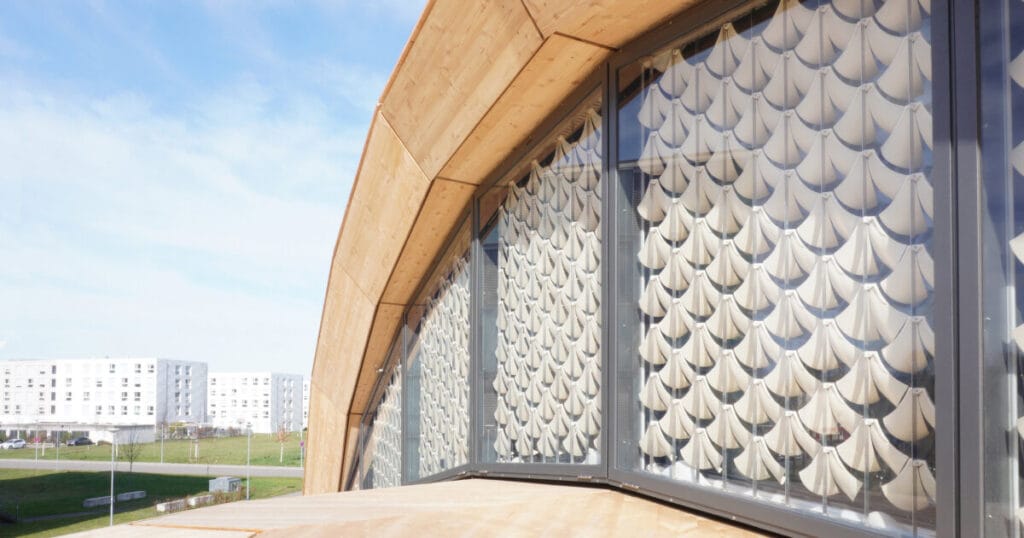
4D printed shades named ‘solar gate’ are responsive
Researchers at the universities of Stuttgart and Freiburg have developed Solar Gate, a 4D printed, weather-responsive shade and facade system that closes and opens on its own. It doesn’t need electricity to run. It flips as soon as it detects changes in humidity and temperature. A reason behind it is that the researchers have succeeded in replicating the structure of cellulose fibers found in plant tissues using standard 3D printers. It is, however, dubbed 4D printed because these materials can alter their forms or movements after printing, in light of the tests.
The researchers use custom-engineered, biobased cellulose fibers for their 4D printed Solar Gate. They develop a computational fabrication method that controls the extrusion of this material. They then place the fibers into standard 3D printers. With this, they generate bilayered structures inspired by the scales of pine cones. The byproduct has the property called hygromorphism, which is an innate feature of a natural material like a pine cone to swell and shrink depending on the levels of humidity. This exact characteristic appears in the 4D printed Solar Gate.
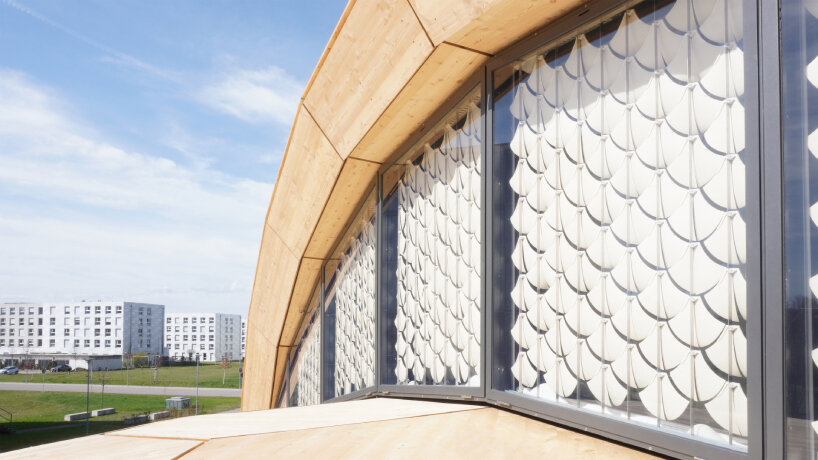
all images courtesy of University of Stuttgart
Pine-cone-inspired Facades that autonomously close and open
In high humidity, the 4D printed Solar Gate absorbs moisture and expands. It causes the printed materials to curl and open on their own. On the other hand, when the environment is in low humidity, the cellulosic materials release moisture and contract. In this case, they flatten and close up. The researchers from the universities of Stuttgart and Freiburg have tested their inventions under real weather conditions for over a year. They’ve installed the weather-responsive shade system on the livMatS Biomimetic Shell. It is a research building at the University of Freiburg, which serves as a demonstrator of the Cluster of Excellence IntCDC and the Cluster of Excellence livMatS.
The researchers have the 4D printed Solar Gate on the south-facing skylight of the building. These weather-responsive shades are responsible for the indoor climate regulation of the facility. During winter, the invention opens on its own to let the sunlight in for natural heating. In the summer, these shades autonomously close to reduce solar radiation. In a study the researchers published, they’ve evidently detailed how only the seasonal weather cycles power up the folding and unfolding of the 4D printed Solar Gate. Their research aims to prove two of many theories in the long run. Accessible and cost-effective technologies, such as additive manufacturing, are possible. In another case, cellulose can also be an abundant and renewable material for architectural solutions.
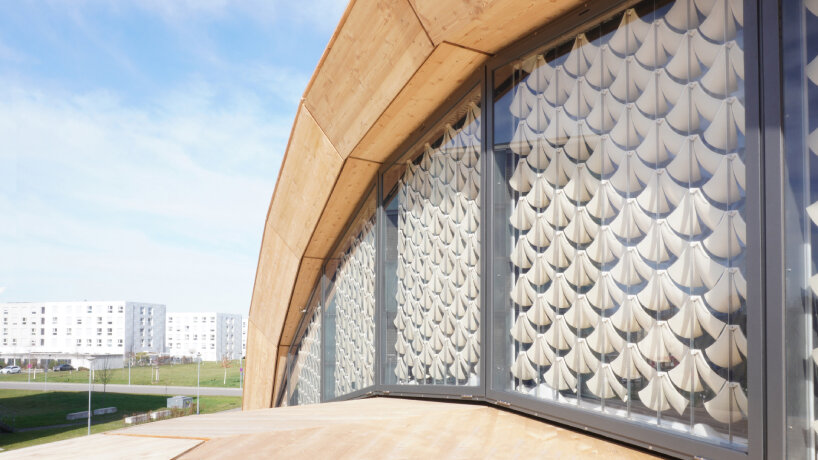
Solar Gate is a 4D printed, weather-responsive shade and facade system that closes and opens on its own
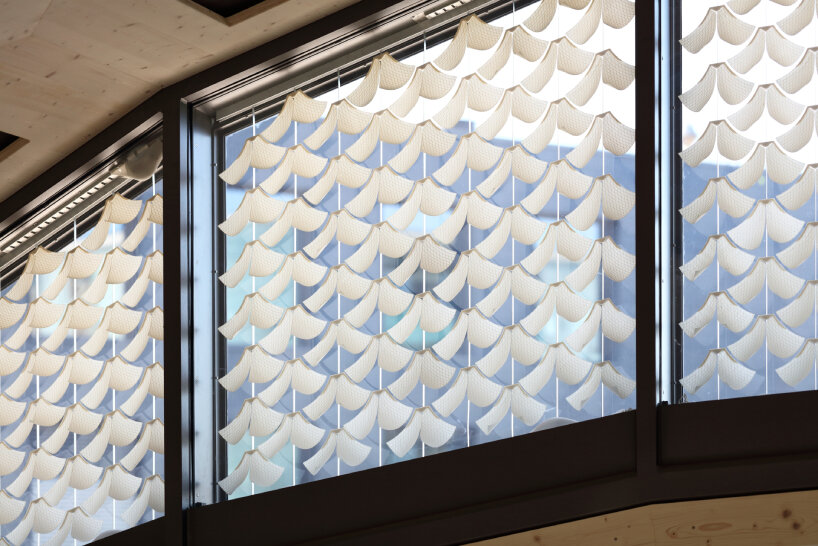
these pine-cone-inspired shades presently don’t need electricity | photo by Conné van d’Grachten
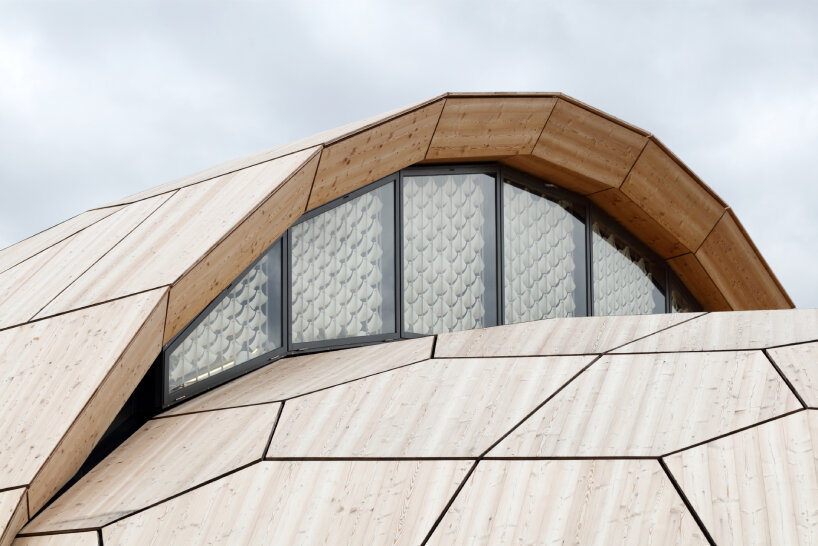
the researchers have tested the shades on the livMatS Biomimetic Shell | photo by Conné van d’Grachten
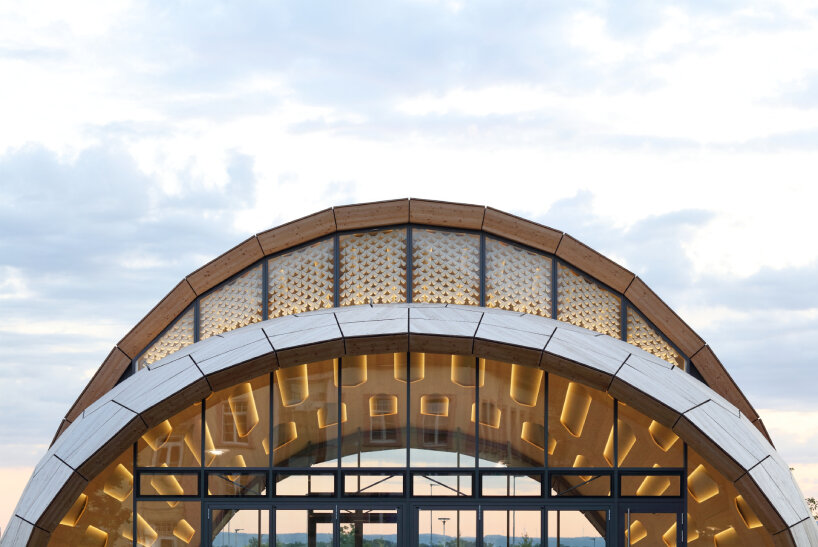
in high humidity, the 4D printed Solar Gate soon expands | photo by Conné van d’Grachten
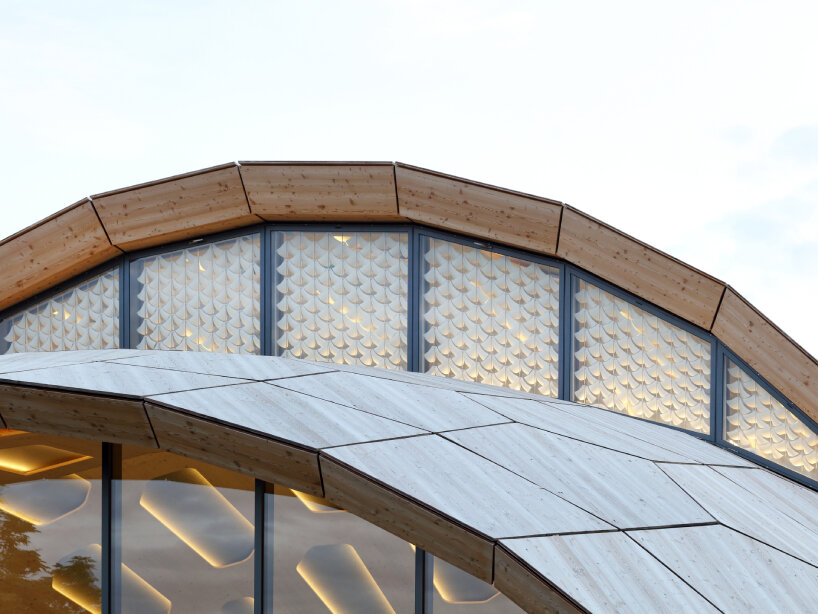
when the environment is in low humidity, the cellulosic materials contract | photo by Conné van d’Grachten