An Expansive Display of Art and History
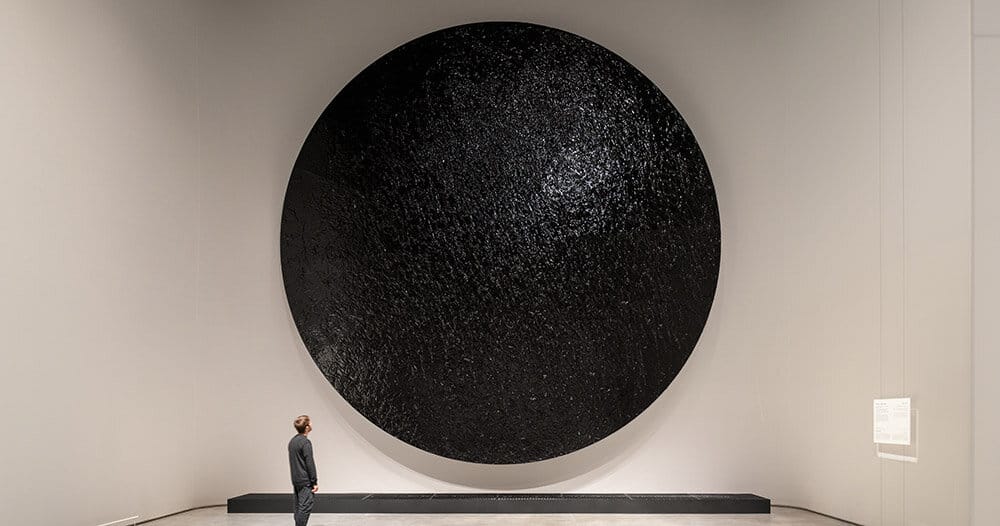
The second edition of the Islamic Arts Biennale has opened in Jeddah, featuring scenography designed by OMA‘s Iyad Alsaka and Kaveh Dabiri. Titled, And All That Is In Between, the exhibition explores the intersection of faith, artistic expression, and craftsmanship, creating a cohesive narrative that bridges historical artifacts and contemporary art in Saudi Arabia.
With over five hundred historical objects and twenty-nine contemporary art commissions, this year’s biennale presents more than twice the content of the inaugural edition. OMA returns to design the scenography, unifying these works within an abstract architectural environment through archetypal forms and a restrained material palette. White fabrics in varying textures are used throughout the exhibition, with subtle lighting changes creating perceived differences in color, ensuring that the design maintains an understated elegance.
images © Marco Cappelletti, courtesy OMA
a Dialogue Between the Past and Present
OMA Partner Iyad Alsaka expressed the firm’s pride in contributing to the expansion of the Islamic Arts Biennale, both within Saudi Arabia and globally. The design team worked closely with the Diriyah Biennale Foundation to create an immersive and thought-provoking environment, reinforcing the significance of this cultural event.
Kaveh Dabiri, OMA Associate, highlighted the challenge of harmonizing the scenography with the diverse historical and contemporary works on display. The team employed an abstract architectural language, relying on lightness and translucency to create a sense of cohesion while avoiding traditional museum-like presentations. This approach allows the exhibition to fluidly blend past and present, inviting visitors to engage with the works on a deeper level.
the second edition of the Islamic Arts Biennale is in Jeddah with scenography by OMA
OMA’s Exhibition spans Seven Components
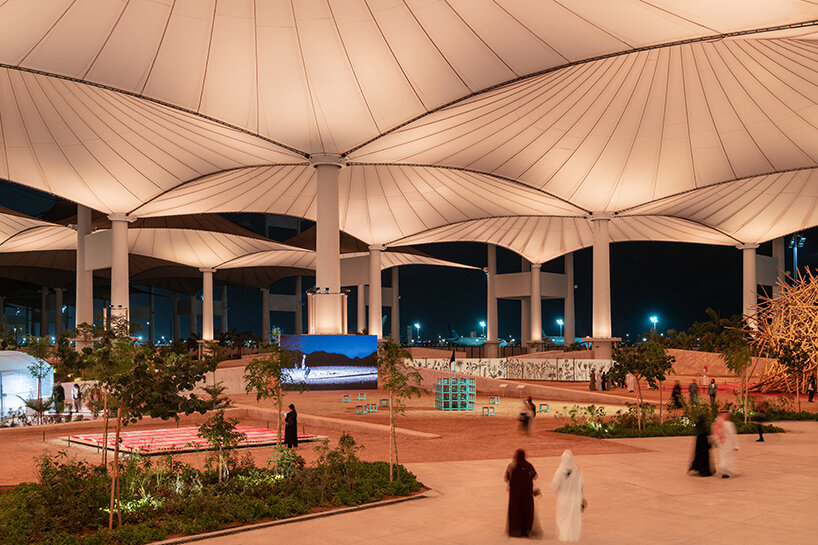
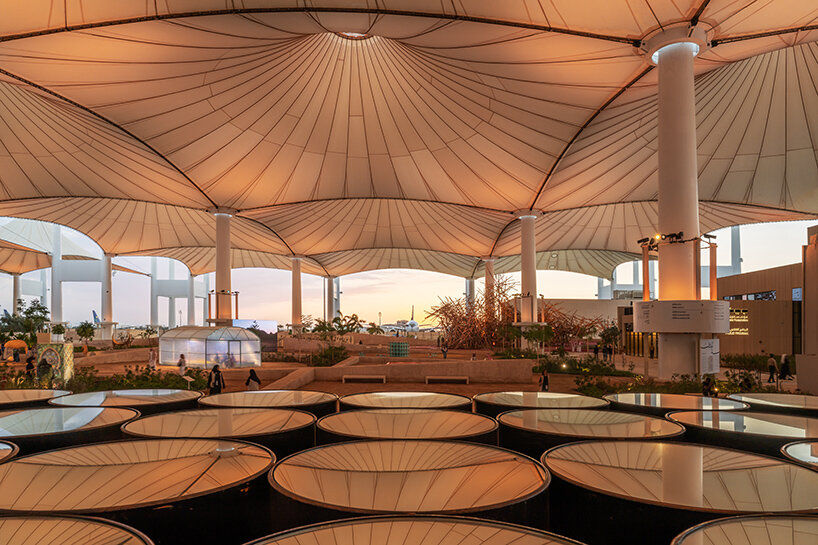
Housed under the Hajj Terminal canopy at Jeddah’s King Abdulaziz International Airport, the exhibition is divided into seven distinct sections: AlBidayah (The Beginning), AlMadar (The Orbit), AlMuqtani (Homage), AlMidhallah (The Canopy), AlMukarramah (The Honored), AlMunawwarah (The Illuminated), and AlMusalla, a dedicated space for prayer and reflection. Each area features a unique design that enhances the thematic focus of the exhibited works.
AlBidayah, dedicated to sacred objects, is characterized by large, curved translucent walls that emphasize the grandeur of the items on display. One of the standout pieces in this section is the Kiswah — the cloth that covers the Holy Kaaba — which is shown in its entirety outside Makkah for the first time. This area also includes other significant items from Makkah and Madinah, alongside contemporary artworks. The use of black frames for vitrines subtly echoes the tones of many displayed pieces.
the exhibition, titled And All That is in Between, explores the connection between faith, art, and craftsmanship
In AlMadar, contributions from over thirty institutions around the world are showcased amidst a forest of thiry-seven abstract, illuminated columns. These concentric layers of translucent textiles rise from vitrines, gradually blending into the darkness above. The density of columns helps guide visitors through thematic clusters, creating an immersive experience while highlighting the breadth of international participation in the biennale.
AlMuqtani’s scenography is designed to provide equal attention to two distinct collections. The gallery’s bowtie-shaped layout divides the space into two triangular sections, each defined by symmetrical pleated walls. These walls host vitrines, which are only revealed as visitors move through the space, creating a sense of discovery. The central area features some of the exhibition’s most valuable and significant pieces.
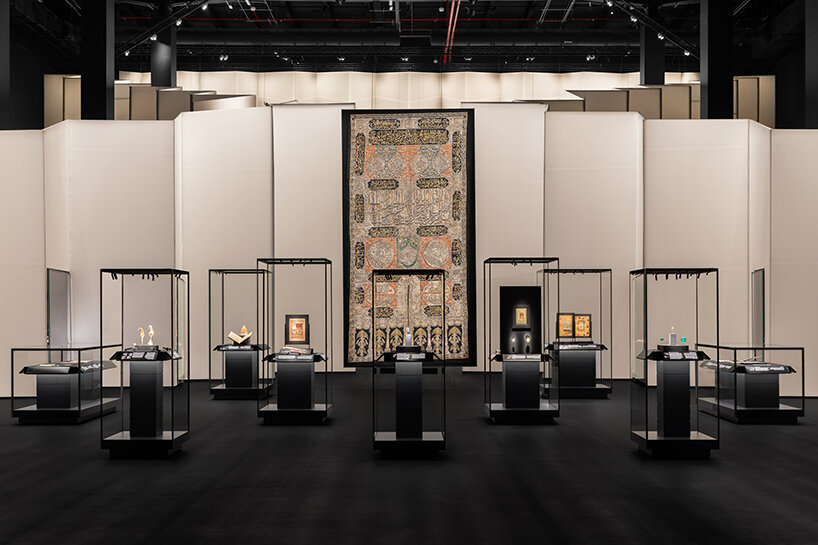
the biennale showcases over 500 historical objects and 29 contemporary art commissions
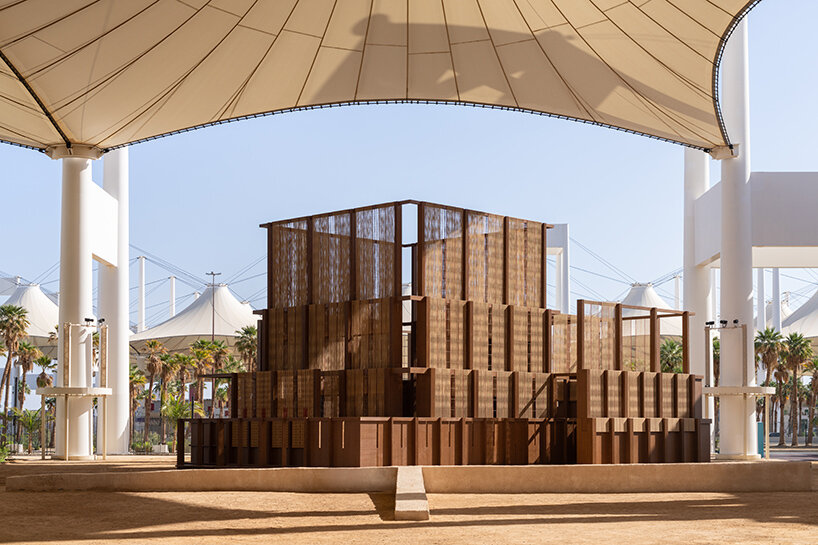
AlMidhallah presents site-specific artworks that reflect the theme of gardens in Islamic culture. The outdoor space, structured by SOM’s Hajj Terminal canopy, is enriched by extensive plantings introduced as part of a 2023 landscape intervention. The resulting arrangement offers a more intimate journey through the exhibition, encouraging visitors to explore the relationships between the artworks and their natural surroundings.
Two pavilions, AlMukarramah and AlMunawwarah, are dedicated to Makkah and Madinah, recognizing Saudi Arabia’s role as the guardian of these holy cities. AlMukarramah explores the significance of Makkah, showcasing historical items related to the Holy Kaaba, rare photographs, and a contemporary installation. AlMunawwarah highlights the legacy of Madinah, featuring gold-embroidered textiles and a design inspired by the city’s welcoming warmth.
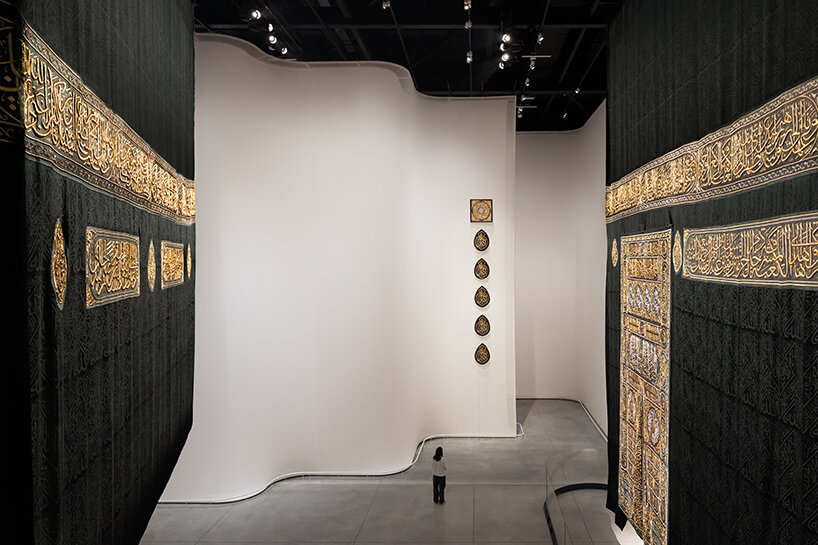
OMA’s design uses abstract forms and restrained materials, with white fabrics and subtle lighting variations
The Islamic Arts Biennale, under the artistic direction of Julian Raby, Amin Jaffer, Abdul Rahman Azzam, and curator of contemporary art Muhannad Shono, will run until May 25th, 2025. OMA’s continued involvement in the biennale reflects the firm’s deep engagement with cultural projects in Saudi Arabia and the broader Middle East. This edition represents a significant chapter in OMA’s expanding portfolio in the region, building on projects such as the Qatar National Library and Concrete at Alserkal Avenue.