À_SOMBRA Redefines Burial Rituals for Ecological Regeneration
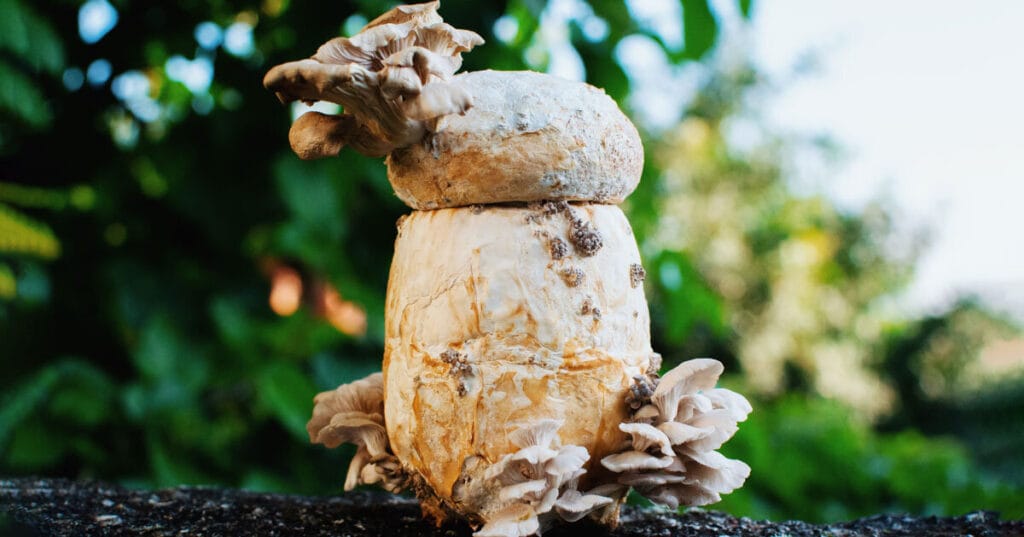
À_SOMBRA introduces a sustainable burial ritual inspired by the Gaia hypothesis and contemporary environmental theories. The project by João Pedro Alves Cavalcanti and Jeanine Torres Geammal from the Federal University of Rio de Janeiro (UFRJ) focuses on ecological regeneration through the integration of human remains into the soil via a biodegradable urn made from mushroom mycelium. The Gaia hypothesis, proposed by biologists Lynn Margulis and James Lovelock, views the biosphere as a living organism composed of interconnected parts that co-evolve. Building on this concept and insights from thinkers such as Donna Haraway, Ailton Krenak, Anna Tsing, and Bruno Latour, the project reimagines cemeteries as green spaces that foster interactions between humans and their environment.
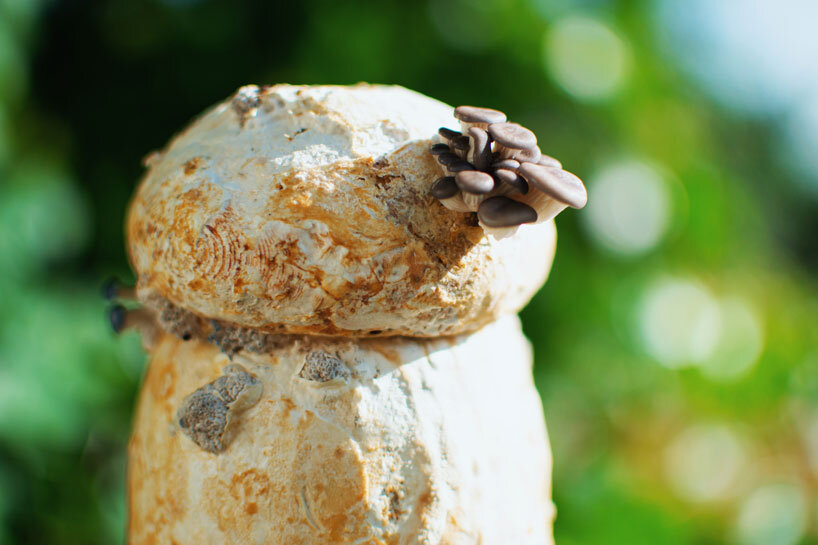
Central to the ritual is a mycelium-based urn, chosen for its ability to interact with plant roots, facilitate nutrient exchange across ecosystems, and detoxify soil through its natural properties, further aligning with environmental burial principles. The urn’s design is influenced by the anthropomorphic urns of the Amazonian Polychrome Tradition and is formed using 3D printed molds. Over time, the biodegradable urn decomposes, enriching the soil and supporting diverse life forms.
all images courtesy of João Pedro Alves Cavalcanti and Jeanine Torres Geammal
Eco-Conscious Burial Process joins Nature, Memory, and Renewal
The burial process, conceived by Industrial Design student João Pedro Alves Cavalcanti and advisor Jeanine Torres Geammal, involves several steps. Human remains, processed through cremation, natural organic reduction (NOR), or alkaline hydrolysis, are reduced to particles suitable for ecological reintegration. These particles are placed into the mycelium urn by loved ones. After a stabilization period of 24 hours, the urn is transported to the burial site using a bamboo carrying structure. At the burial site, a space is prepared to hold the urn and part of the bamboo structure. Family and friends can participate in the act of placing the urn into the ground. The mycelium and human remains nourish the soil, sustaining microbial and plant life.
The bamboo structure features a QR code linked to a digital memorial, offering information about the deceased and the local ecosystem. As the bamboo biodegrades, the burial site remains identifiable through GPS coordinates stored on a virtual map. This ensures the evolving green space is accessible and meaningful to visitors, promoting sustainable practices and reshaping urban cemeteries into vibrant, life-affirming landscapes.
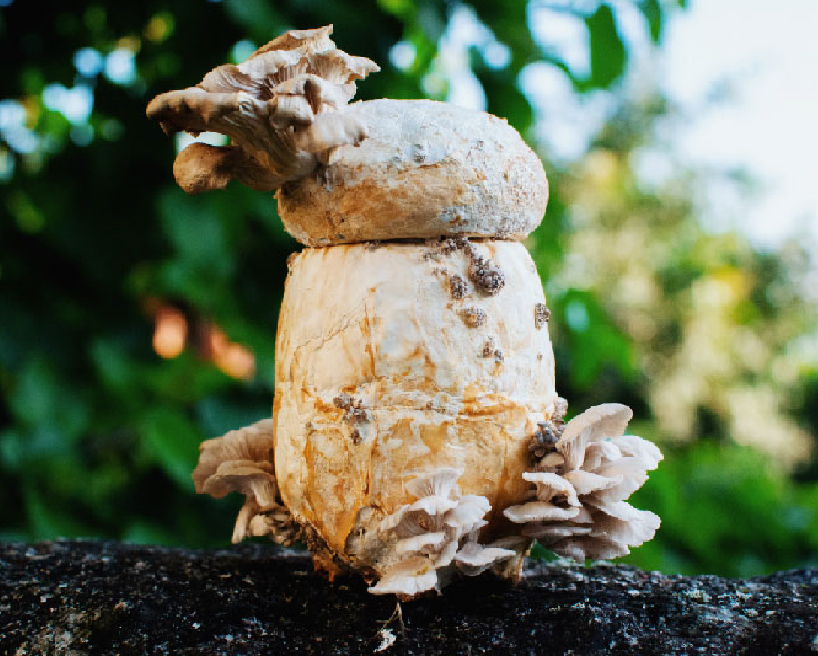
À_SOMBRA introduces a sustainable burial ritual inspired by the Gaia hypothesis and ecological regeneration
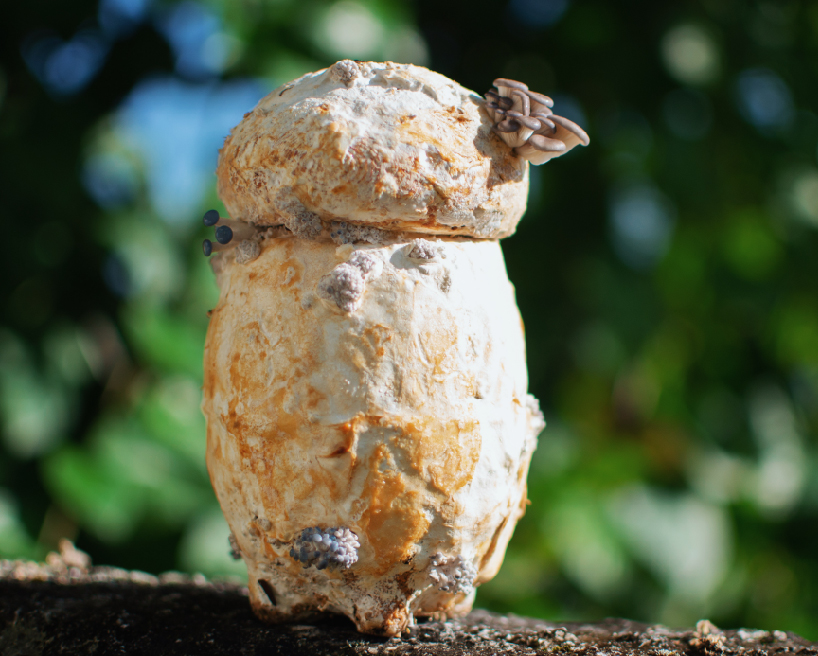
the project integrates human remains into the soil using biodegradable urns made from mushroom mycelium
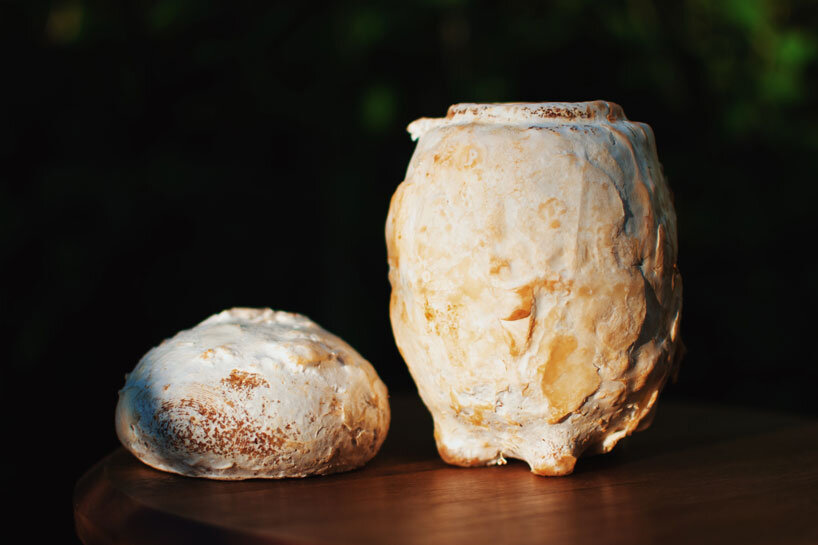
mycelium-based urns decompose naturally, enriching the soil and supporting microbial and plant life
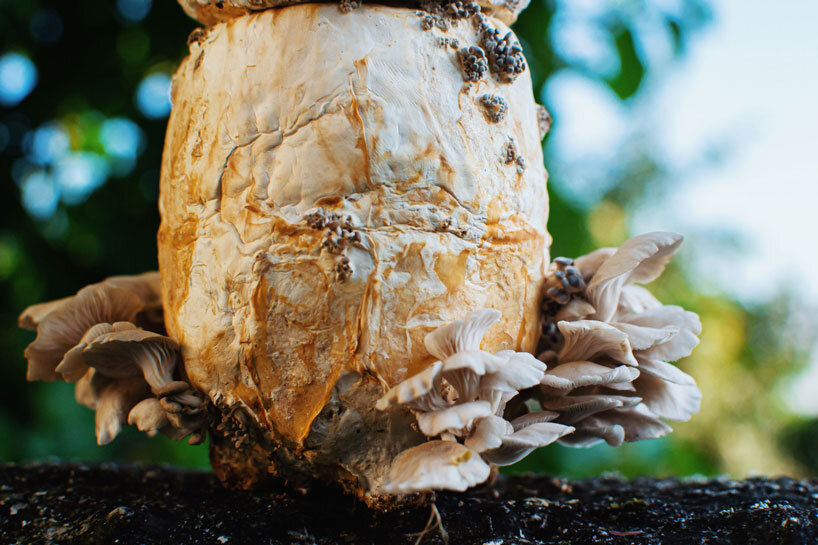
mycelium supports ecosystems by connecting with plant roots and aiding nutrient communication