awa arquitectos’ project educates about artificial reservoirs
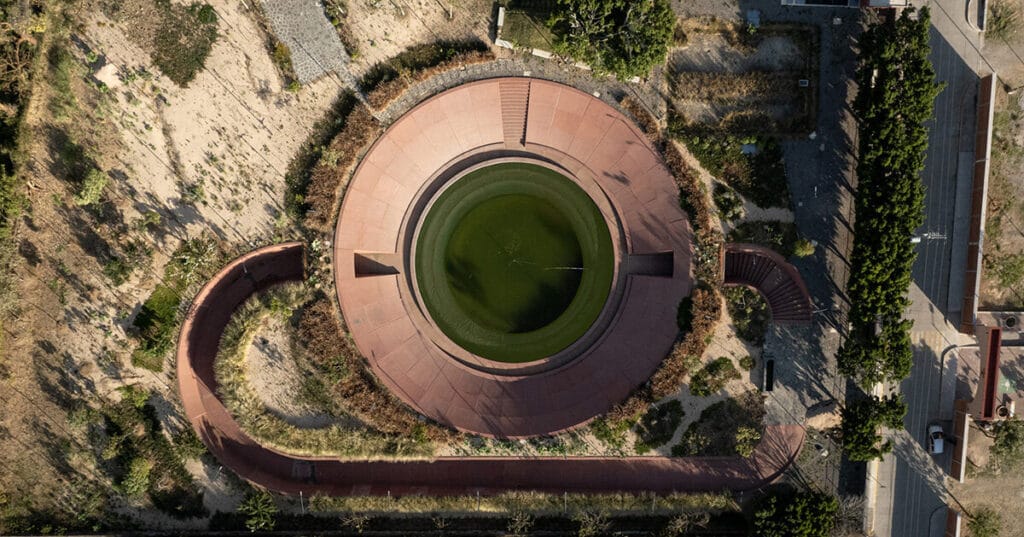
In collaboration with Laboratorio Regional de Arquitectura, awa arquitectos unveil Parque El Jagüey, a public space project in Atlatlahucan, Morelos, Mexico, that revisits the historical water collection techniques of the region. The intervention aims to preserve and educate about the jagüey, an artificial reservoir traditionally used for irrigation and human consumption. The architects transform its last remaining example in the municipality into a contemplative and ecological landmark.
The jagüey—a term referring to land depressions or small reservoirs that store rainwater for livestock and domestic use—was once vital to rural communities but has become obsolete with the expansion of modern hydraulic infrastructure.
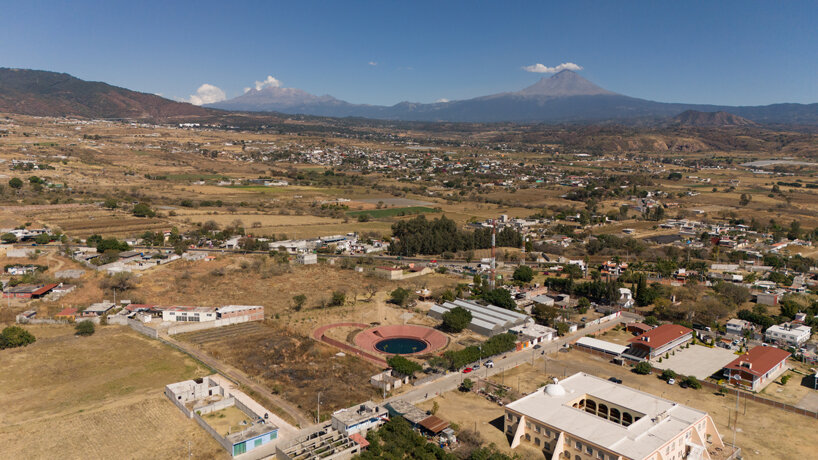
all images by Ana Paula Álvarez, courtesy of awa arquitectos and Laboratorio Regional de Arquitectura
Parque El Jagüey honors mexican water management techniques
To counteract the disappearance of the jagüey, Mexico city-based awa arquitectos and Laboratorio Regional de Arquitectura in this project, which is part of Mexico’s Urban Improvement Program by the Secretariat of Agrarian, Land, and Urban Development, seek to restore and integrate this element within a contemporary public space.
Designed as an educational and recreational hub, the park features a restored water reservoir accessible via a gently sloping ramp that encircles the site, offering views of the landscape. Endemic vegetation islands foster biodiversity, creating an immersive natural setting, while an elevated observatory and wetland highlight the ecological significance of the area. By intertwining history, sustainability, and public engagement, Parque El Jagüey fosters an appreciation for ancestral water management techniques while bringing a long-forgotten element of Mexican cultural heritage back to life.
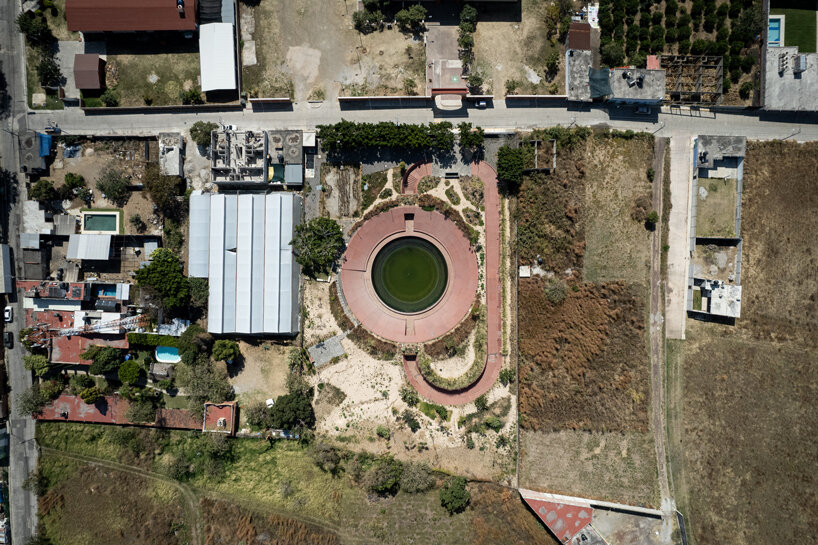
Parque El Jagüey is a public space project in Atlatlahucan, Morelos, Mexico | image by Miguel Cobos
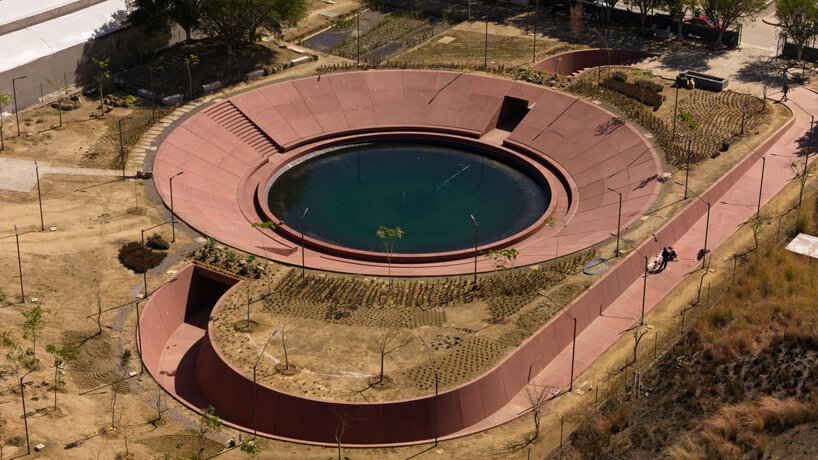
the intervention aims to preserve and educate about the jagüey
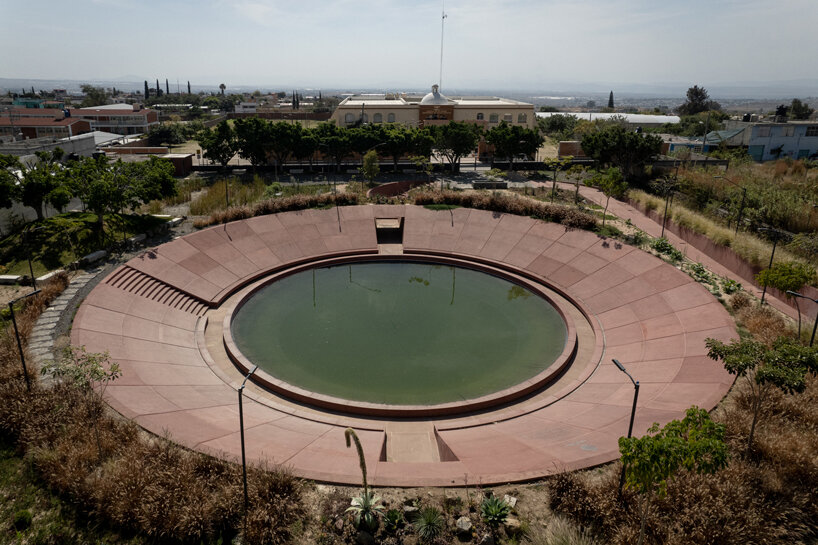
revisiting the historical water collection techniques of the region | image by Miguel Cobos
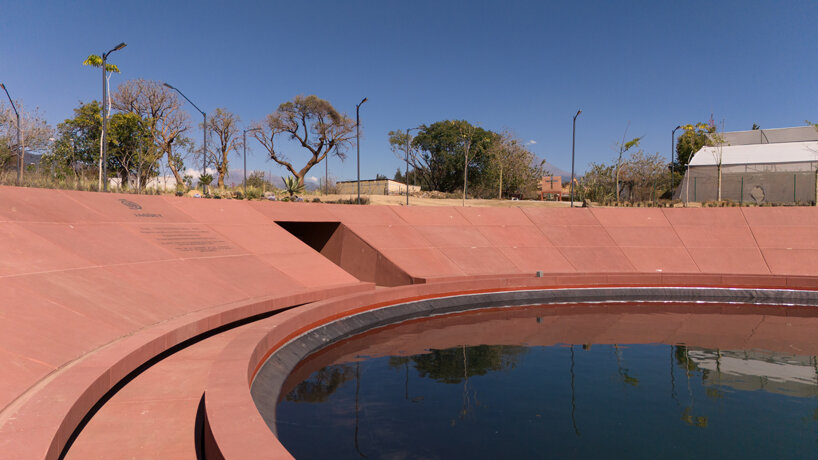
this artificial reservoir is traditionally used for irrigation and human consumption