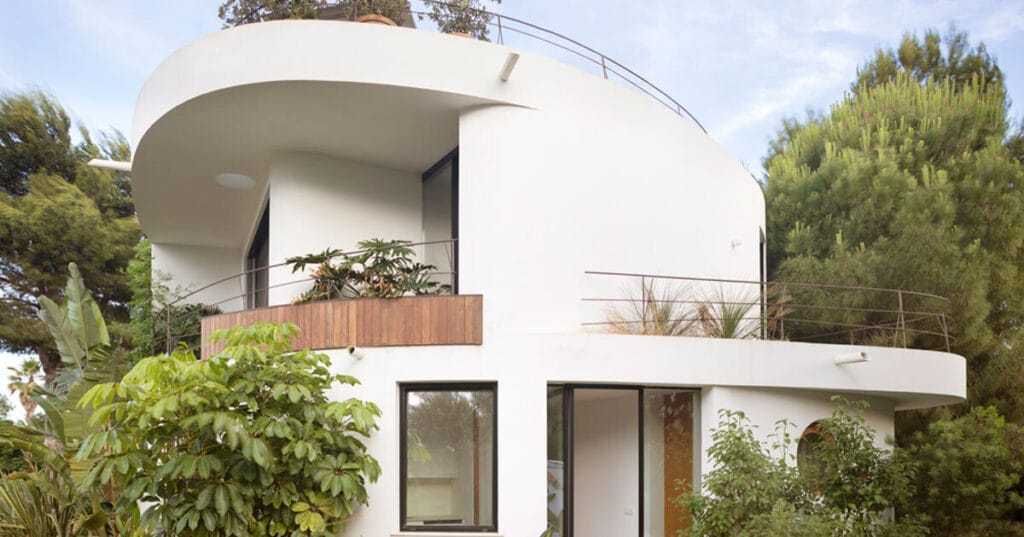
organic forms and lush vegetation define HOUSE IN LES ROTES
Architects Selba García-Clarck and Daniel Carratalá Climent craft House in Les Rotes, a residence defined by organic forms and lush vegetation. The house is situated in the coastal area of the Les Rotes Natural Park in Dénia, Spain, approximately 100 meters from the Mediterranean Sea. The design prioritizes continuity with the landscape, incorporating a smooth, organic form with minimal edges and integrating vegetation throughout the site. Most pre-existing trees have been preserved, and the two-story volume is positioned to frame views of the Mediterranean Sea between neighboring structures. The project emphasizes visual integration with the natural surroundings while considering its environmental impact on the park.
The building envelope is designed to optimize heat exchange with the exterior, with a focus on southern orientation for solar gain and panoramic views to the east. The main living spaces are elevated on the first floor, while the lower level is accessed via an organically shaped staircase emerging from an interior water feature. Circulation patterns inside and outside the house establish a connection between the built forms and the surrounding garden.
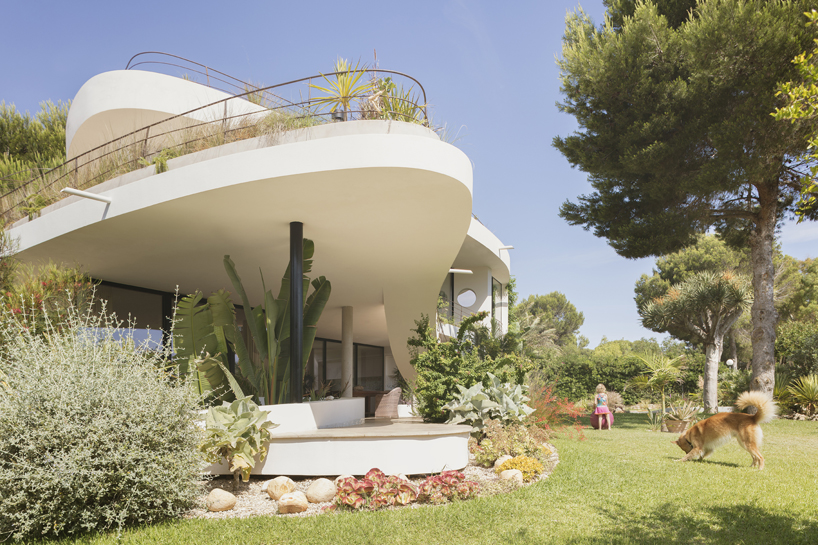
all images by ©Milena Villalba
biophilic design informs House in Les Rotes’ architecture
Environmental strategies include passive thermal regulation through the south facade, cross-ventilation across interior spaces, and vertical ventilation facilitated by a thermal chimney (skylight) enhanced by the evaporative cooling effect of the interior pond. These measures contribute to maintaining a comfortable indoor climate year-round, reducing reliance on mechanical heating and cooling.
The project by architects Daniel Carratalá Climent and Selba García-Clarck follows a biophilic design approach, incorporating natural materials such as black cork for insulation, oak timber, and locally sourced stone. Non-toxic finishes are used to avoid emissions of volatile organic compounds and formaldehyde. Sustainable water management systems include wastewater treatment through total oxidation, rainwater collection via roof gargoyles for storage in an underground tank, and a natural swimming pool purified through a gravel bed and aquatic plants, enhancing local biodiversity.
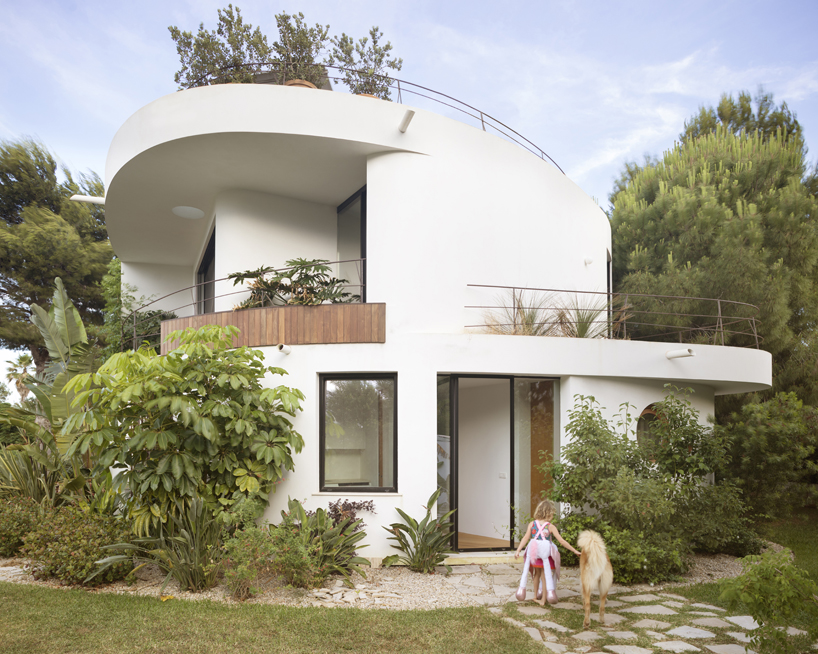
House in Les Rotes integrates organic forms with the surrounding natural landscape
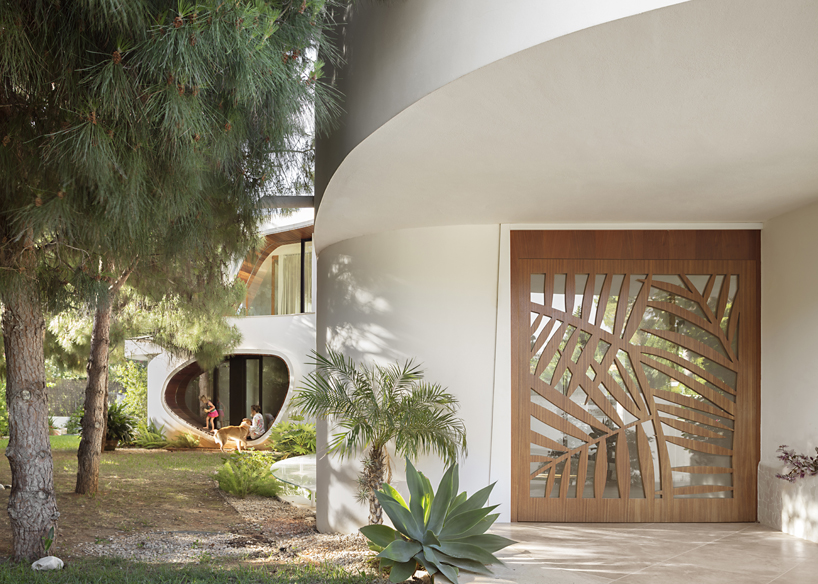
designed to minimize visual impact, the house maintains a smooth, curved form with minimal edges
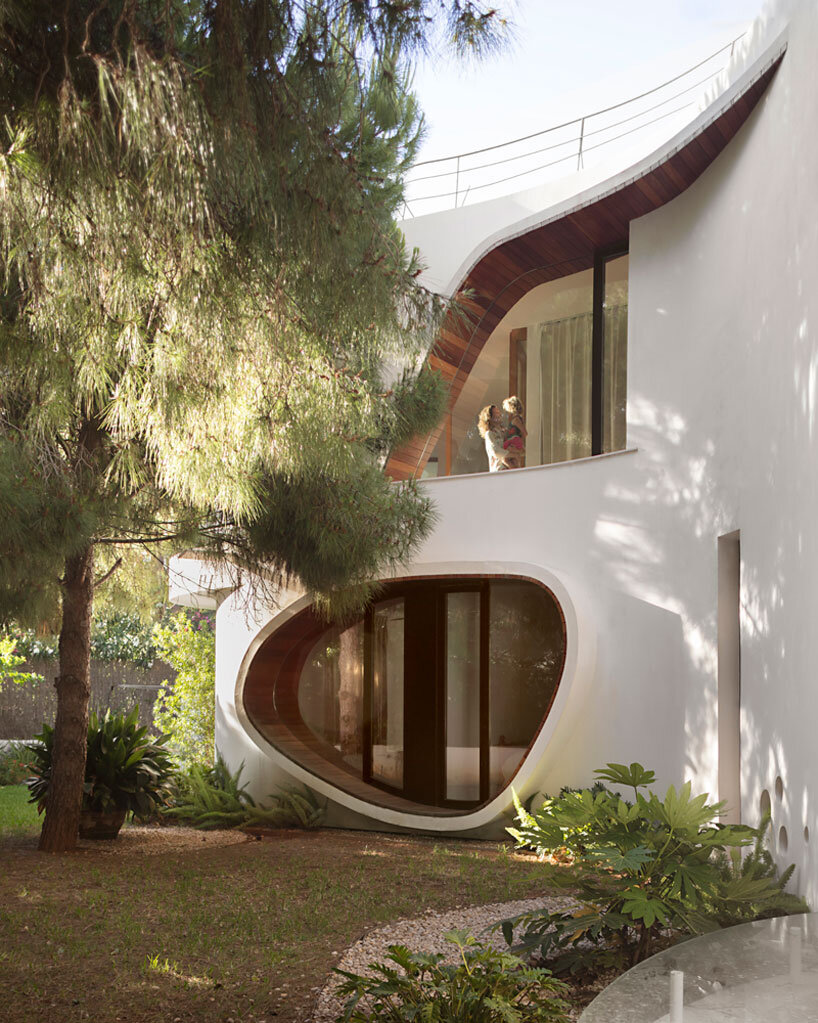
the structure is positioned to preserve pre-existing trees while framing views of the Mediterranean
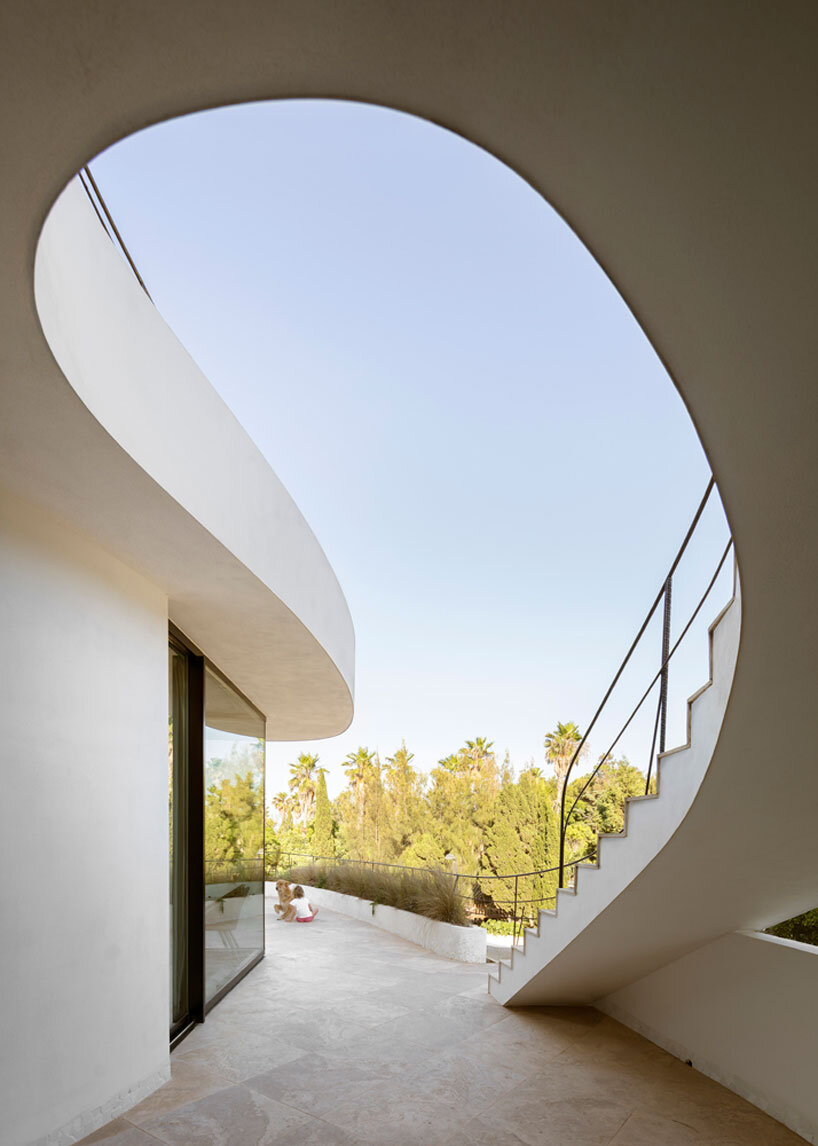
the two-story volume is carefully oriented to maximize natural light and ventilation
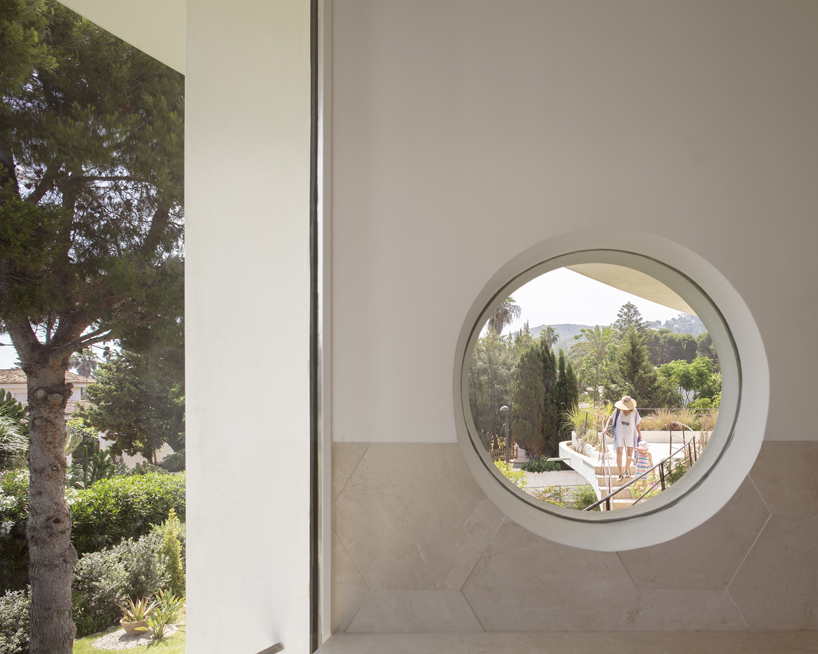
the design fosters a fluid connection between indoor and outdoor spaces