Sanuki Daisuke architects revisits vietnam’s tube house typology
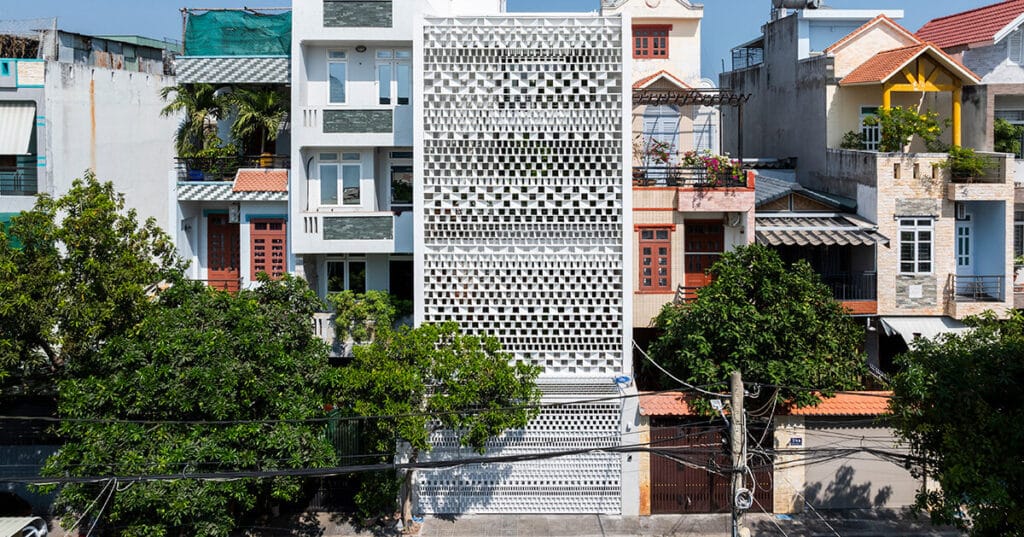
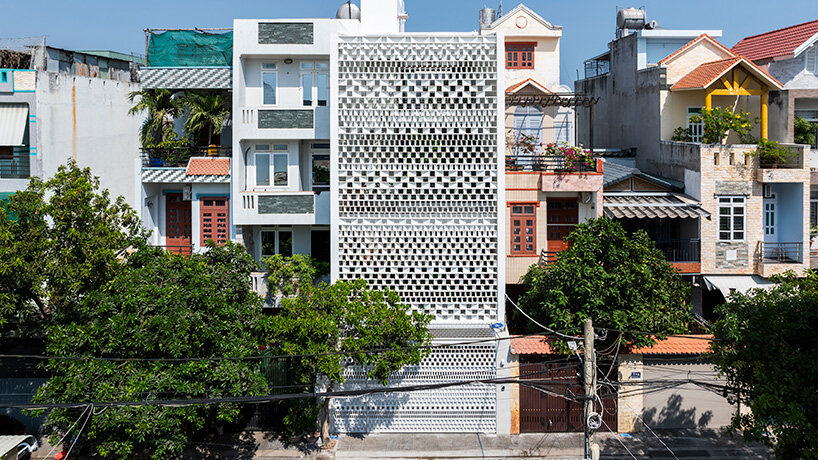
Sanuki Daisuke Architects redefines the tube house typology in Vietnam, creating Vung Tau House, a home that merges urban density with natural light, ventilation, and greenery. The project addresses the challenges of the typical nhà ống (tube house) design, which dominates Vietnam’s urban landscape—narrow, elongated plots flanked by neighboring walls and limited to a single open facade.
Responding to these constraints, the architects introduce a cross-sectional model that separates the house into enclosed private spaces and open, interconnected communal areas, allowing natural light and ocean breezes to permeate the interiors.
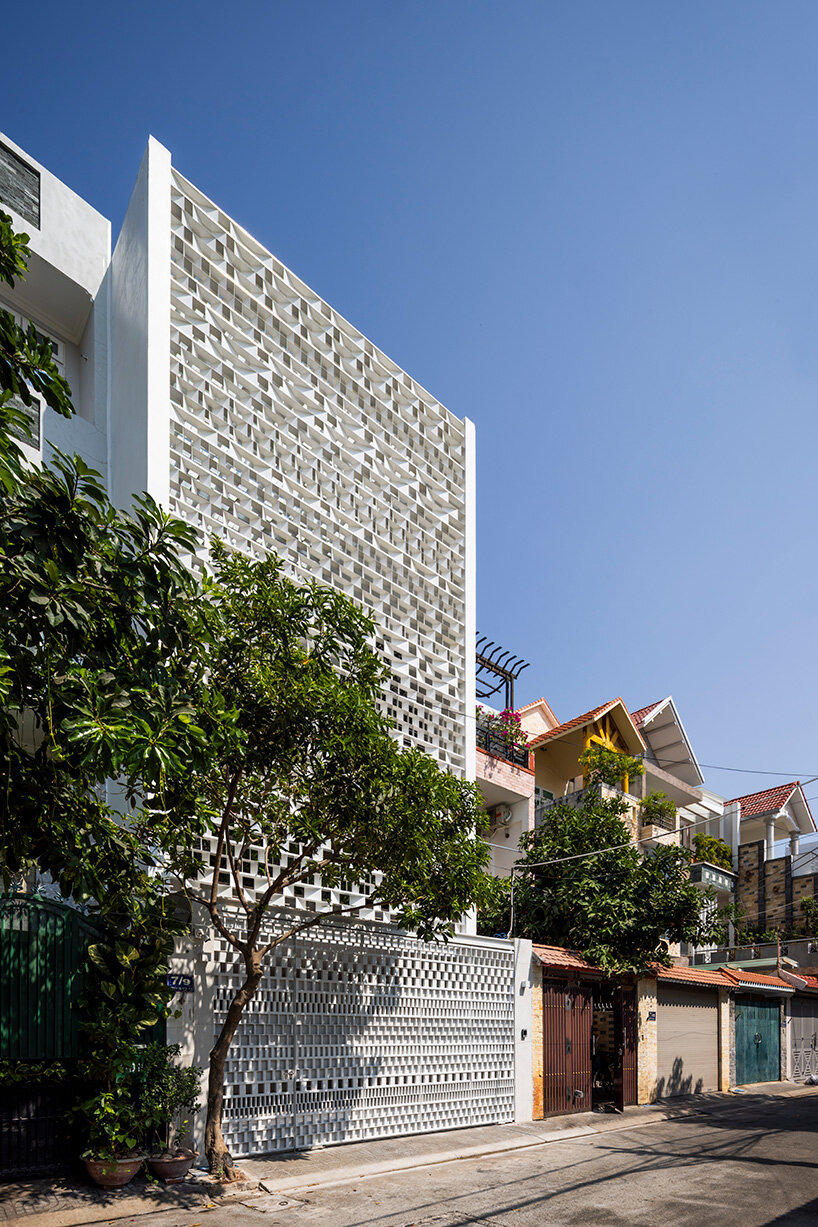
To mitigate the harsh afternoon sunlight, the west-facing facade is equipped with light steel shades composed of angled panels. These stacked elements cast shifting patterns of light and shadow throughout the day, creating a playful and ever-changing visual experience. The shaded buffer zone reduces heat, filters daylight, and fosters a vibrant, semi-outdoor environment.
all images by Hiroyuki Oki, courtesy of Sanuki Daisuke Architects
Vung Tau House is conceived as a blank space between buildings
Ho Chi Minh City-based Sanuki Daisuke Architects conceptualize the entire site as a ‘blank’ space between neighboring buildings. On the ground floor, private rooms and play areas establish a solid base, while staggered floor slabs from the second floor upwards create layers of open spaces. These overlapping levels are connected by a circulation system of bridges and staircases.
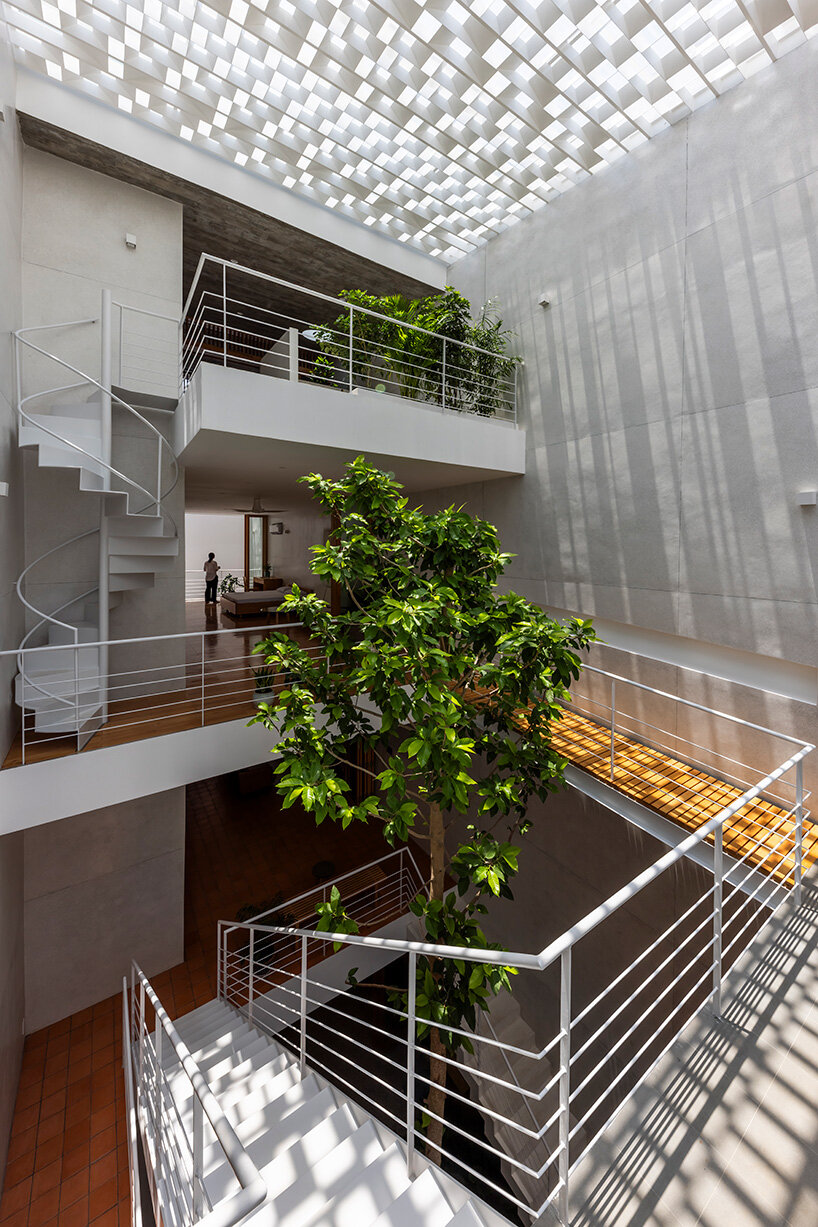
The house occupies a standard strip-shaped plot, measuring approximately four to eight meters in width and 20 meters in depth, with its west-facing front exposed to intense tropical sunlight. This orientation often leads to uncomfortable living conditions, while the enclosed sides and rear restrict ventilation and daylight. A soaring atrium, extending from the first floor to the roof, channels airflow through the home, while a ten-meter White Champak tree planted in the front yard creates a verdant focal point. This vertical garden connects the house’s spaces visually and spatially, embodying the idea of living in harmony with nature.
Children can play under dappled sunlight while enjoying the growing greenery, which evolves alongside the house. Movable partitions such as sliding and folding doors further dissolve the boundary between indoor and outdoor spaces, ensuring that every room maintains a strong connection to the garden.
Sanuki Daisuke Architects redefines the tube house typology in Vietnam
Vung Tau House is a home that merges urban density with natural light, ventilation, and greenery
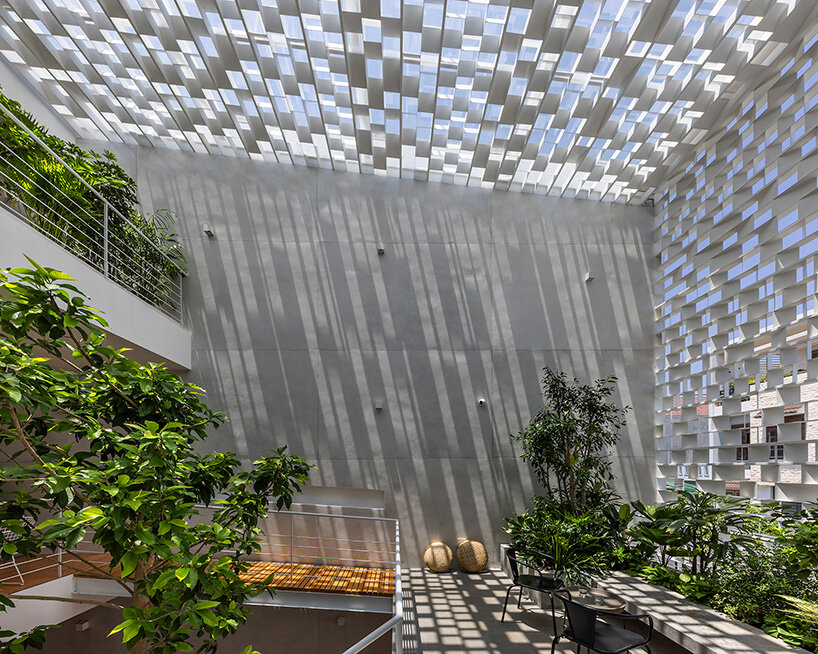
the project addresses the challenges of the typical tube house design
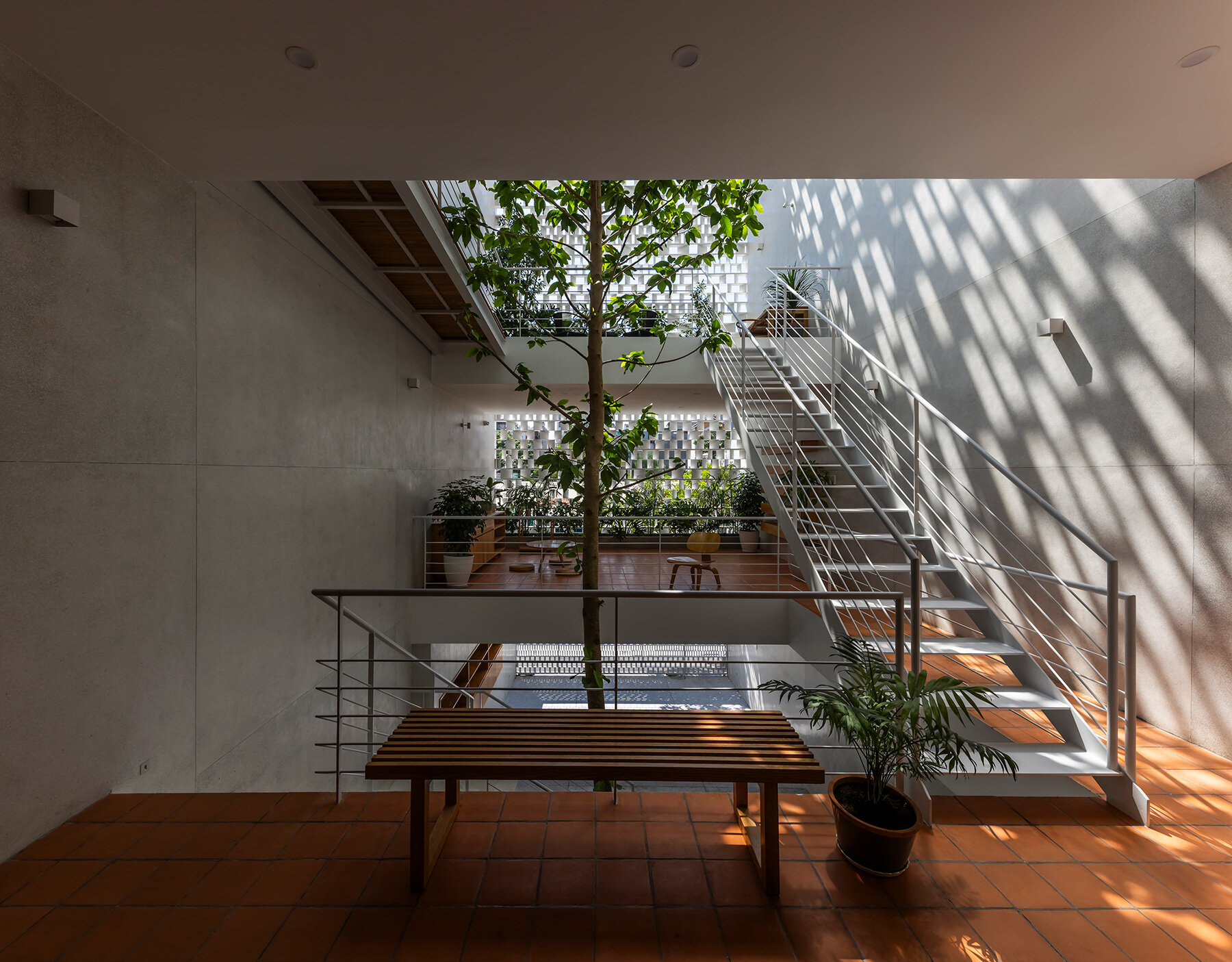
tube houses are built on narrow plots and are flanked by neighboring walls and limited to a single open facade