
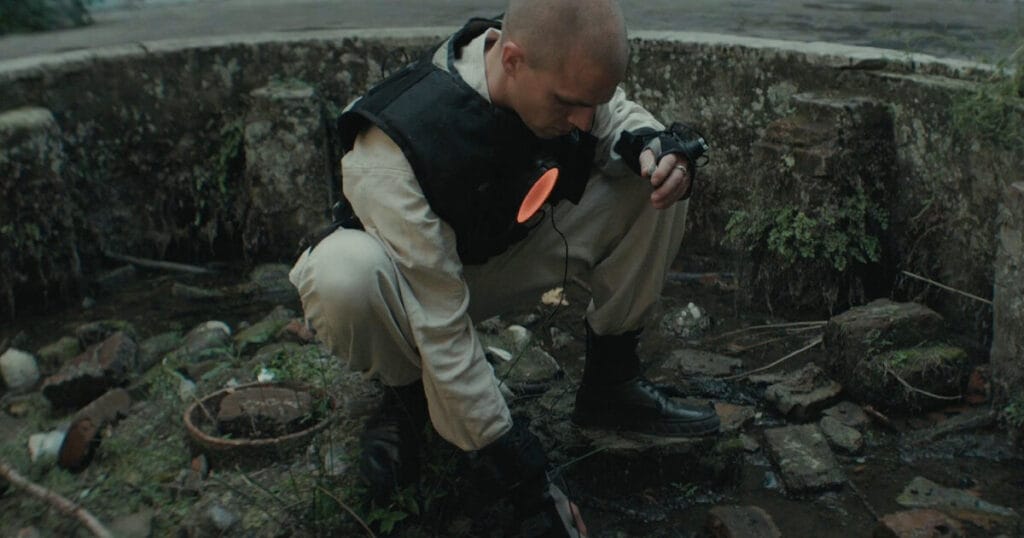
Gaia Communication System feels the health of nature
Pavels Hedström introduces Gaia Communication System, a wearable vest and a pair of gloves with sensors so that users feel the health of plants, insects, soil, air, and more. Unveiled under his design practice Inxects, the Swedish architect installs multiple haptic sensors around the vest and gloves, each of which correspond to a natural object. The Spectral Sensor detects early signs of plant stress. The Bioacoustic Sensor hears communication between insects and animals. The Water Sensors measure the pH levels and turbidity of any kind of water.
The Air Sensors track the carbon emissions in the winds, as well as the humidity and temperature levels. The Soil Sensor monitors its moisture. These sensors around the Gaia’s vest and gloves detect and provide real-time data. They translate them into vibrations that users can feel on their chest, back, and the sides of their body. At the center of the vest, there lies a dynamic LED light. It plays colored animations – green, orange, and red – depending on what the users feel, so they can also visually see the health of the ecosystems.
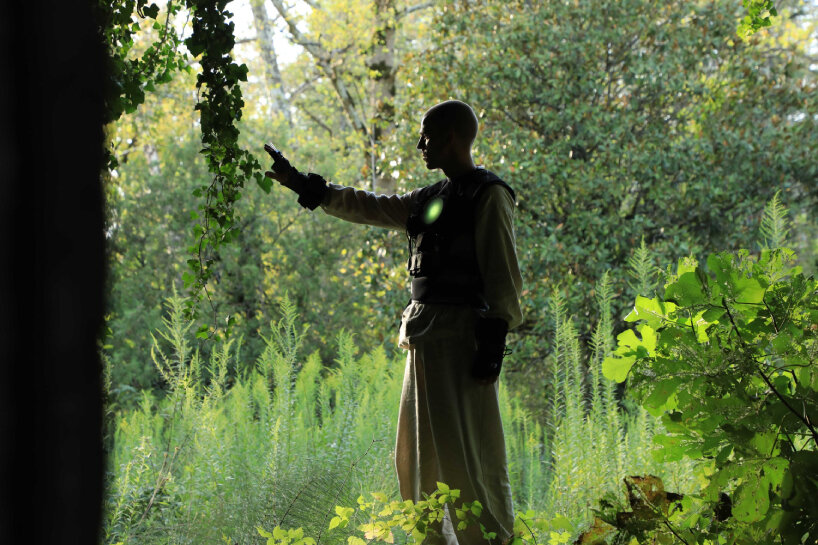
all images courtesy of Pavels Hedström and Inxects
Solar-powered Wearable vest and gloves with sensors
Sunlight powers up the wearable vest and gloves with sensors. Pavels Hedström adds four mini solar panels on the back of the vest, positioned as an ‘X’. Around these panels are five haptic motors, as well. The front of the Gaia vest has the LED light with animations, the Water Sensor below it, and the Bio Acoustic Sensor beside it.
The left glove has the carbon emission, Celsius, and humidity sensor, as well as the Soil Moisture and the Spectral ones. On the right glove of Gaia lies the Turbidity Sensor and the Somatosensory System.The Swedish designer originally designed the Gaia Communication System as a tool for architects who are conducting field research.
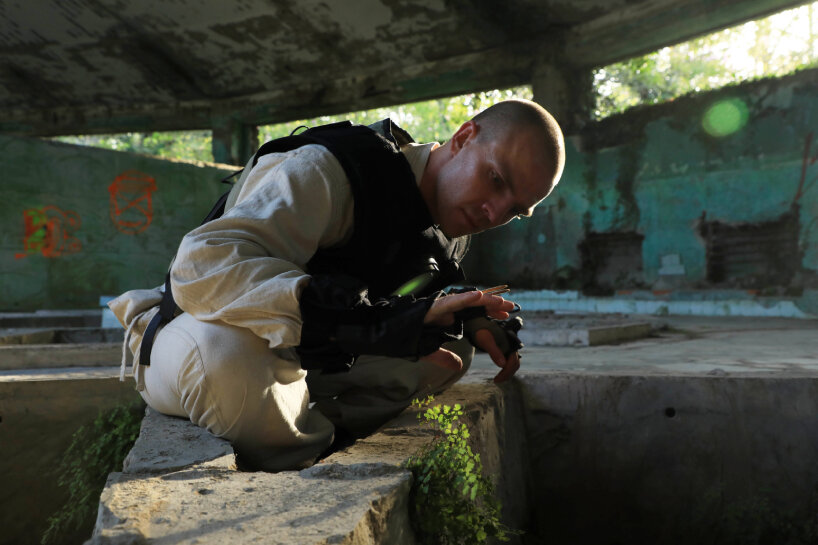
Pavels Hedström introduces Gaia Communication System, a wearable vest and a pair of gloves with sensors
suitable for urban planners, policymakers, and individuals
The wearable vest and gloves with sensors have long expanded applications, suitable for urban planners, policymakers, and individuals too. Pavels Hedström draws his concept inspiration from the ability of the insects to sense and respond to environmental changes. He mentions ants as an example since they’re able to detect carbon dioxide to locate food or manage their nests.
Then, the bees too, as they’re able to sense temperature and humidity to maintain hive conditions and support colony survival. With the Gaia Communication System, the Swedish architect hopes that people can experience an extended sensory system that allows them to understand and feel the current state of nature.
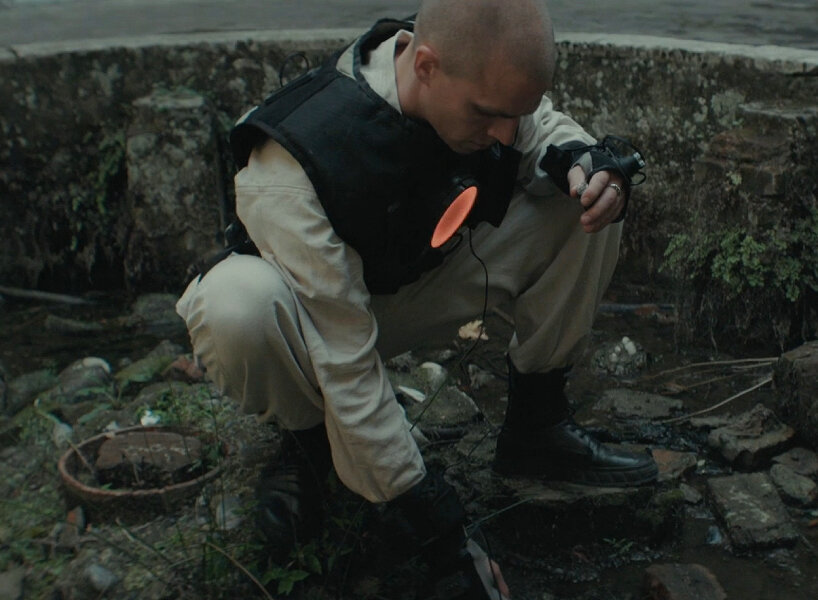
using the sensors, users feel the health of plants, insects, soil, air, and more
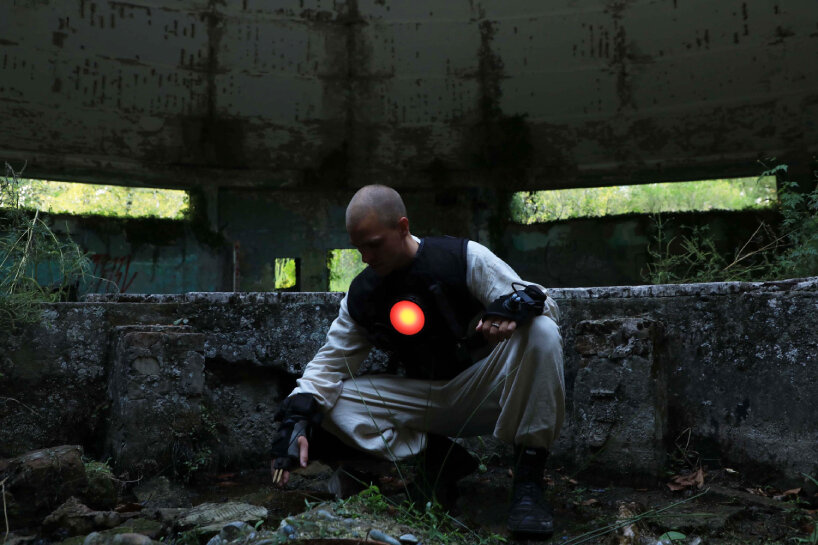
the LED light plays colored animations – green, orange, and red – depending on what the users feel
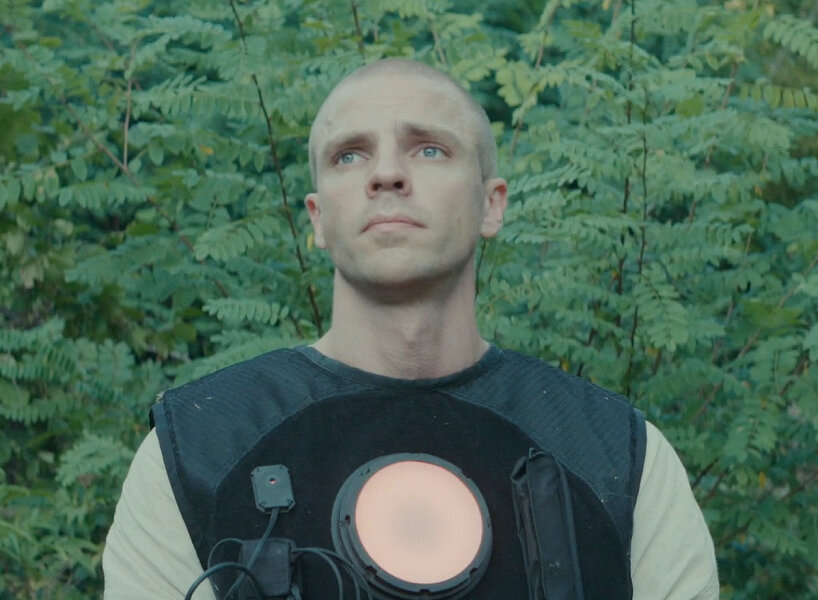
the Swedish architect installs multiple haptic sensors around the vest and gloves
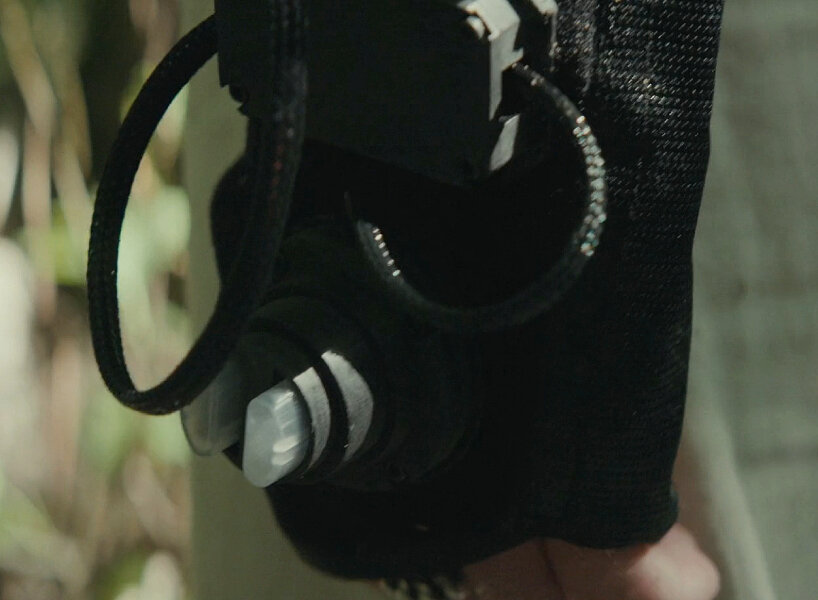
view of the glove with sensors

